
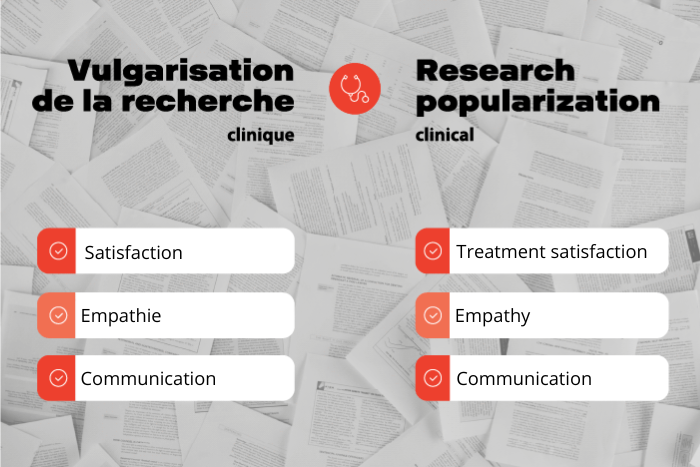

There is a strong link between patient-centered care, in particular physician empathy and various clinical outcomes. The concept of empathy in healthcare refers to the ability of the physician to understand the patient’s experience and to provide therapeutic care based on the patient’s needs and experiences. Few studies have explored this issue in the context of chronic pain.
goal
This recent study conducted by professor Stéphanie Cormier’s pain and health laboratory of Université du Québec en Outaouais, examined the association between the perceived physician empathy and the psychological distress reported by people living with persistent pain.
methodology
The study was conducted included a community sample of 259 adults reporting living with persistent pain and who were under the care of a physician. Each participant was asked to complete an online questionnaire collecting demographic information, perceived level of empathy from their treating physician, treatment satisfaction as well as symptoms of depression and anxiety.
main findings
The results indicate that the majority of patients perceive their treating physicians as having a good or very good empathy towards them. Consistent with the literature, those who perceived less physician empathy also reported more symptoms of depression. Evidence also demonstrated that treatment satisfaction contributed to explain the relationship between perceived physician empathy and the symptoms of depression and anxiety reported by this population.
take home message
Aligned with the patient-centered care, this study helps to reinforce the value of addressing persistent pain in a holistic approach. Empathetic communication, especially when it is consistent with patient’s needs positively influences their experience of their medical condition and can therefore contribute to effective management of persistent pain.
